
Prosecutors don’t discriminate against black jurors simply out of racial animus. They do it because black Americans are, on average, more skeptical of police and prosecutors—and that skepticism is exactly what the government wants to keep out of the jury room. Fixing racial discrimination alone does not solve the problem. Only stopping prosecutors from striking jurors for being open to acquittal would do that.
Consider Pitchford v. Cain, a case in which the Supreme Court hears oral arguments today. The petitioner there alleges that prosecutors struck prospective black jurors to secure a conviction and death sentence—textbook racial discrimination. But whichever way the Court decides the procedural issue raised in Pitchford, its holding won’t stop prosecutors from removing prospective jurors skeptical of the government through perfectly legal means.
Prosecutors prefer juries primed to convict defendants—and racial discrimination is one way of getting them. The ban on it just means prosecutors have to build compliant juries using creative workarounds. Several states responded to the ban on excluding jurors based on race by pursuing rules designed to nullify Black jurors’ influence. Louisiana enacted a facially race-neutral rule allowing for convictions despite nonunanimous jury verdicts, “borne from a desire to ensure that black men were convicted when charged with a crime.” Oregon later adopted this measure, too—at the behest of the Ku Klux Klan.
The Supreme Court ultimately invalidated this nakedly racist subversion of the jury system. It has also authorized defendants to challenge discretionary juror strikes that prosecutors use as a cloak for racial discrimination. Now, in Pitchford, it is considering what precisely a defendant must argue at trial to later appeal alleged racial discrimination in jury selection.
But at every turn, prosecutors have remained committed to bringing a case before the most sympathetic jury they can muster. For instance, during jury selection in the Flowers v. Mississippi death penalty case, the Court reviewed in 2019, the prosecution routinely declined “to seek what they do not want to find about white prospective jurors” while seeking “some pretextual reason—any reason”—to strike black ones. And strike them it did. In five different trials against the defendant, the prosecution struck all but one of the black jurors it was able to. It took 23 years and a Supreme Court decision before the prosecution finally dismissed all charges.
The prosecution’s dogged two-decade campaign wasn’t merely an expression of racial animus. It was a rational strategy: remove the jurors most likely to acquit the defendant—and spare his life—using race as a reliable shortcut for finding them.
And yet nothing stops prosecutors from pursuing the same goal through facially neutral means—targeting juror skepticism directly, rather than using race as a proxy for it. As my colleague Mike Fox has written, even though targeting prospective jurors based on their race or ethnicity is forbidden, “seeking to categorically exclude those who most embody the community’s shared skepticism” is a routine part of jury selection.
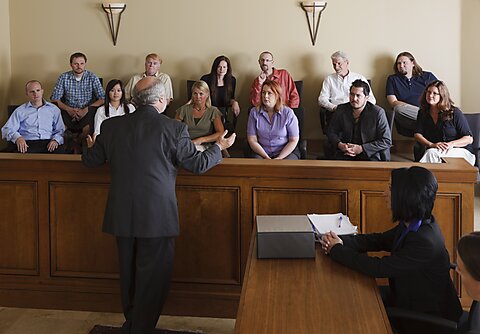
Prosecutors ask prospective jurors whether they or their loved ones have had bad experiences with law enforcement, question them about their views of criminal laws, and inquire as to whether they would acquit based on their sense of justice—checking for signs that someone may do more than simply rubber-stamp a conviction. Then they strike accordingly.
This is jury-stacking, dressed up in neutral language. The real promise of the Constitution is not a jury composed of people with superficial differences. It’s that a defendant has the right to seek trial before a representative cross-section of the community. When prosecutors systematically strike black jurors, they often do so precisely in order to keep a skeptical segment of the community off the jury.
Whichever way the Court rules in Pitchford, that case only scratches the surface. Truly securing the right to an impartial jury requires the Court to go further: Jury strikes based on government skepticism or openness to conscientious acquittal should be no less unconstitutional than those based on race. This would depart significantly from current doctrine. But it would respect what the Constitution promises. Prosecutors should have to take the community as they find it—skeptics and all.