No Result
View All Result
  • About us
  • Contact us
  • Privacy Policy
  • Terms & Conditions
Smart Investment Today
  • News
  • Economy
  • Editor’s Pick
  • Investing
  • Stock
  • News
  • Economy
  • Editor’s Pick
  • Investing
  • Stock
No Result
View All Result
Smart Investment Today
No Result
View All Result
Home Investing

HS2 speeds could be cut as government seeks to rein in spiralling costs

by
March 23, 2026
in Investing
0
HS2 speeds could be cut as government seeks to rein in spiralling costs
0
SHARES
1
VIEWS
Share on FacebookShare on Twitter

The government is considering reducing the operating speed of HS2 trains as part of a wider effort to contain costs and avoid further delays on the troubled high-speed rail project.

Ministers are expected to instruct HS2 Ltd to assess the feasibility of running trains below the originally planned top speed of 360km/h (224mph) on the line between London and Birmingham — a move that could save billions but would dilute one of the scheme’s defining features.

The proposal forms part of a broader review led by Transport Secretary Heidi Alexander, who is examining options to bring the project back under control after years of cost overruns and delays.

HS2’s total cost is now expected to exceed £100 billion in today’s prices, with the completion date for the initial London–Birmingham phase likely to slip beyond the current 2033 target.

A long-awaited “reset” plan, being developed by chief executive Mark Wild, is expected to set out a revised timetable and budget, although its publication has been delayed until after the May elections.

Wild, who previously led the Crossrail project, was brought in to stabilise the programme and restore confidence after the government described the scheme as “an appalling mess”.

HS2 was originally designed as one of the fastest conventional railways in the world, with a maximum operating speed of 360km/h. However, achieving and validating those speeds presents significant technical and financial challenges.

Testing trains at full speed would require either a dedicated test track or a fully completed railway, both options that could add years to the project timeline and further inflate costs. An alternative under consideration is testing trains overseas, potentially in China, where suitable high-speed infrastructure already exists.

By contrast, lowering the initial operating speed could simplify testing requirements, reduce engineering complexity and accelerate delivery, albeit at the expense of headline journey times.

For context, most UK rail services operate at speeds of up to 200km/h (125mph), while high-speed services on HS1, the Channel Tunnel route, reach up to 300km/h.

The potential shift highlights the ongoing tension between performance ambitions and fiscal realities. While HS2 was conceived as a transformative high-speed network connecting London with major cities including Manchester and Leeds, the northern legs of the project have already been scrapped, significantly scaling back its original vision.

Under current plans, trains will continue north from Birmingham to Manchester using existing infrastructure on the West Coast Main Line, operating at lower speeds than on the purpose-built HS2 track.

Critics argue that further compromises risk undermining the project’s value proposition, while supporters say pragmatic adjustments are necessary to ensure completion.

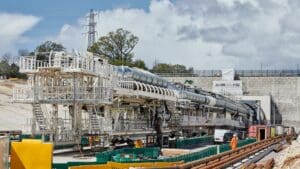
The review comes as major construction milestones, including tunnels, viaducts and earthworks, continue to progress along the route, even as the project remains years from operational readiness.

The government is under increasing pressure to demonstrate that HS2 can be delivered within a realistic budget and timeframe, particularly given wider fiscal constraints and competing infrastructure priorities.

Lowering train speeds, while politically sensitive, is emerging as one of several options being considered to bring the project back on track.

Whether that compromise proves acceptable will depend on how it balances cost savings against the original promise of a world-class high-speed railway, a question that is likely to define the next phase of HS2’s evolution.

Read more:
HS2 speeds could be cut as government seeks to rein in spiralling costs

Previous Post

Danone to acquire Huel in €1bn deal as functional nutrition market heats up

Next Post

Primary Care Shortages Are Driving Patients to AI—Will Regulators Stand in the Way?

Next Post
Primary Care Shortages Are Driving Patients to AI—Will Regulators Stand in the Way?

Primary Care Shortages Are Driving Patients to AI—Will Regulators Stand in the Way?

    Stay updated with the latest news, exclusive offers, and special promotions. Sign up now and be the first to know! As a member, you'll receive curated content, insider tips, and invitations to exclusive events. Don't miss out on being part of something special.


    By opting in you agree to receive emails from us and our affiliates. Your information is secure and your privacy is protected.

    • Trending
    • Comments
    • Latest

    Gold Prices Rise as the Dollar Slowly Dies

    May 25, 2024

    Richard Murphy, The Bank of England, And MMT Confusion

    March 15, 2025

    We Can’t Fix International Organizations like the WTO. Abolish Them.

    March 15, 2025

    Free Markets Promote Peaceful Cooperation and Racial Harmony

    March 15, 2025

    Ana-Maria Coaching Marks Milestone with New Book Release

    0

    New Bonded Warehouse Facilities Launched in Immingham

    0

    From Corporate Burnout to High-Performance Coach: Anna Mosley’s Inspiring Journey with ‘Eighty’

    0

    Simple Registration Increases Credit Application Success by 27.7%, Reports BadCredit.co.uk

    0
    Primary Care Shortages Are Driving Patients to AI—Will Regulators Stand in the Way?

    Primary Care Shortages Are Driving Patients to AI—Will Regulators Stand in the Way?

    March 23, 2026
    HS2 speeds could be cut as government seeks to rein in spiralling costs

    HS2 speeds could be cut as government seeks to rein in spiralling costs

    March 23, 2026
    Danone to acquire Huel in €1bn deal as functional nutrition market heats up

    Danone to acquire Huel in €1bn deal as functional nutrition market heats up

    March 23, 2026
    UK borrowing costs hit highest level since 2008 as markets reel from energy shock

    UK borrowing costs hit highest level since 2008 as markets reel from energy shock

    March 23, 2026

    Recent News

    Primary Care Shortages Are Driving Patients to AI—Will Regulators Stand in the Way?

    Primary Care Shortages Are Driving Patients to AI—Will Regulators Stand in the Way?

    March 23, 2026
    HS2 speeds could be cut as government seeks to rein in spiralling costs

    HS2 speeds could be cut as government seeks to rein in spiralling costs

    March 23, 2026
    Danone to acquire Huel in €1bn deal as functional nutrition market heats up

    Danone to acquire Huel in €1bn deal as functional nutrition market heats up

    March 23, 2026
    UK borrowing costs hit highest level since 2008 as markets reel from energy shock

    UK borrowing costs hit highest level since 2008 as markets reel from energy shock

    March 23, 2026
    • About us
    • Contact us
    • Privacy Policy
    • Terms & Conditions

    Copyright © 2025 smartinvestmenttoday.com | All Rights Reserved

    No Result
    View All Result
    • News
    • Economy
    • Editor’s Pick
    • Investing
    • Stock

    Copyright © 2025 smartinvestmenttoday.com | All Rights Reserved