


In the high-stakes theater of the American legal system, the trial is often sold as a quest for truth. We imagine a defendant standing before a jury of their peers, a fair fight where the burden of proof rests entirely with the state. But for those facing the ultimate punishment, the reality is far darker. The death penalty transforms the legal process into a high-pressure extraction, where the right to a jury trial is often a trap that leads straight to a coercive plea bargain.
This transition from justice to coercion is driven by two powerful, interlocking forces: the sheer psychological weight of a death threat and the systematic curating of the jury pool.
To understand how plea-bargaining works in capital cases, one must look at the trial penalty—the gap between the sentence offered in a deal and the sentence risked at trial. When the state adds the death penalty to the table, that gap becomes a chasm. It’s the ultimate prosecutorial lever.
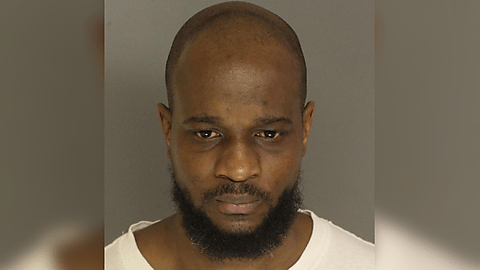
We recently saw this play out in the Cumberland County, Pennsylvania, prosecution of Michael Anthony Baltimore Jr., where a case that began with a notice of intent to seek the death penalty concluded with a plea for third-degree murder and a sentence of 15 to 30 years. When a case resolves with such a significant disparity, it raises a haunting question: Was death ever the goal, or was it merely a strategic tool used to secure maximum leverage?
In this environment, the defendant’s decision-making process is no longer about guilt or innocence; it’s about survival. This pressure is so immense that it frequently leads to the innocence problem, where even the wrongly accused are incentivized to plead guilty to heinous crimes they didn’t commit. Faced with a choice between years behind bars and a coin flip that could end in an execution chamber, the human instinct for self-preservation often overrides the pursuit of exoneration. The bargain becomes a ransom—the defendant gives up their constitutional rights just to ensure their survival.
If a defendant manages to resist this pressure and demands their day in court, they find themselves in a courtroom where the deck has been stacked before the first opening statement. This is due to a process known as death qualification. In cases where the death penalty is an option, prosecutors are permitted to strike prospective jurors who express a firm moral or religious opposition to capital punishment.
The result is a jury that’s fundamentally unrepresentative of the community. Decades of social science have shown that death-qualified jurors aren’t only more likely to favor the prosecution, but they’re also statistically more likely to convict. By purging the jury of those with certain ethical convictions, the state effectively engineers a panel that’s predisposed toward the government’s narrative. Furthermore, the very act of death-qualifying a jury sends a chilling psychological signal. Before a single piece of evidence is presented, jurors are grilled on whether they have the stomach to kill the person sitting at the defense table. This creates a subtle but pervasive presumption of guilt; it implies that the trial is merely a formality preceding an inevitable sentencing phase.
When you combine a conviction-prone jury with the threat of execution, the choice to go to trial disappears. Defense attorneys are forced into a heartbreaking position. They must advise their clients that if they choose to exercise their Sixth Amendment right to a trial, they’ll be judged by a panel of people specifically selected for their willingness to be punitive.
In this light, the capital plea bargain isn’t a good-faith negotiation between two parties of equal standing. It’s a surrender. The death penalty is increasingly used not as a punishment for the “worst of the worst,” but as a pretrial pressure mechanism to keep defendants jailed for years and force them into submission. The state uses the specter of death to bypass the trial process entirely, securing convictions carrying lengthy terms of incarceration without ever having to prove their case beyond a reasonable doubt to a truly representative cross-section of the public.
We must ask ourselves what it says about our pursuit of justice when the truth is something bought with the threat of a needle. When the law uses the fear of death to silence the defense, the resulting plea is not a resolution—it’s an ultimatum.