Central Asia has long been described through a familiar set of themes: commodity markets, construction, trade, and state-led modernization projects.
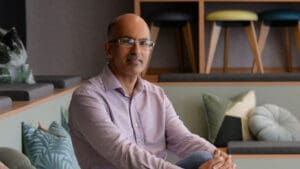
That perspective still appears in outside publications, although the real picture has long been more complex. The region is changing, and this is especially evident in entrepreneurs whose interests no longer fit within the boundaries of a single industry. Ulugbek Mirzamukhamedov is one such example. His professional path shows how a new approach to business is taking shape in Uzbekistan, one in which what matters is no longer individual sectors in themselves, but the way they relate to one another.

The beginning of this trajectory was fairly typical for the post-Soviet space. Manufacturing, construction, real estate, and industrial projects were precisely the sectors on which growth in many economies of the region long depended. That experience is familiar and recognizable. What matters far more is how the next stage developed. Today, Ulugbek Mirzamukhamedov is a co-founder of the Semurg ecosystem, which brings together insurance, venture investment, and ESG projects. What matters here is not the list of sectors itself, but the principle by which they are connected.
In cases like this, the word “ecosystem” often sounds like a convenient label. Yet in the story of Semurg, it reflects a very specific business model. This is not a random portfolio of assets, but an attempt to build an integrated structure. In materials published by Modern Diplomacy, Semurg is described as a space where insurance, venture capital, and a broader view of development exist within a single business framework. This already represents a different level of business organization, where attention shifts from individual assets to the architecture of the whole structure.
The sequence here is also revealing. First came the insurance business. Then the venture direction was launched. Later, ESG projects appeared within this combination. Each of these decisions looks understandable on its own. Together, they create a more layered picture. Insurance is connected with risk management and trust. Venture investment works with future growth and new technologies. ESG sets a long-term horizon and raises the question of sustainability. In such a system, business does not simply expand outward. It becomes more complex and more substantial, because new directions are built into a shared architecture.
For this reason, it makes more sense to speak here not of diversification in the usual sense, but of an attempt to build an integrated business environment. Fragmented assets can coexist for years without creating a new quality. A coherent structure requires a different scale of thinking. It assumes that different segments reinforce one another, contribute to overall resilience, and shape a more complex business model. This is precisely the approach that can be seen in Ulugbek Mirzamukhamedov’s trajectory.
The venture direction deserves particular attention. Among the projects mentioned in Semurg VC’s portfolio are Multicard, Jett.uz, and Rahmat. This list says little on its own unless one looks at its internal logic. One project is linked to payment infrastructure. Another is connected to access to investment instruments. The third is a digital service for the restaurant sector. Taken together, they point to an interest in solutions that become part of the everyday economy and change it at a practical level. There is no visible attempt here to collect fashionable names for external effect. Rather, what emerges is an interest in services that are becoming part of a new urban and financial environment.
That is why the story of Ulugbek Mirzamukhamedov matters not simply as an example of an entrepreneur working across several sectors at once. It is far more accurate to view it as a reflection of a broader shift in Uzbek business. What is taking place is a move away from a sector-based principle toward a more complex system, one in which value arises from the ability to connect capital, technology, trust, and new formats of growth.
Through his own example, Ulugbek Mirzamukhamedov shows how important this kind of approach is: not movement from one industry to another, but an attempt to build a more integrated business environment in which insurance, investment, technology, and a long-term agenda exist within a common framework. It is precisely such trajectories that make it possible today to see more clearly how business is changing in Uzbekistan and Central Asia.